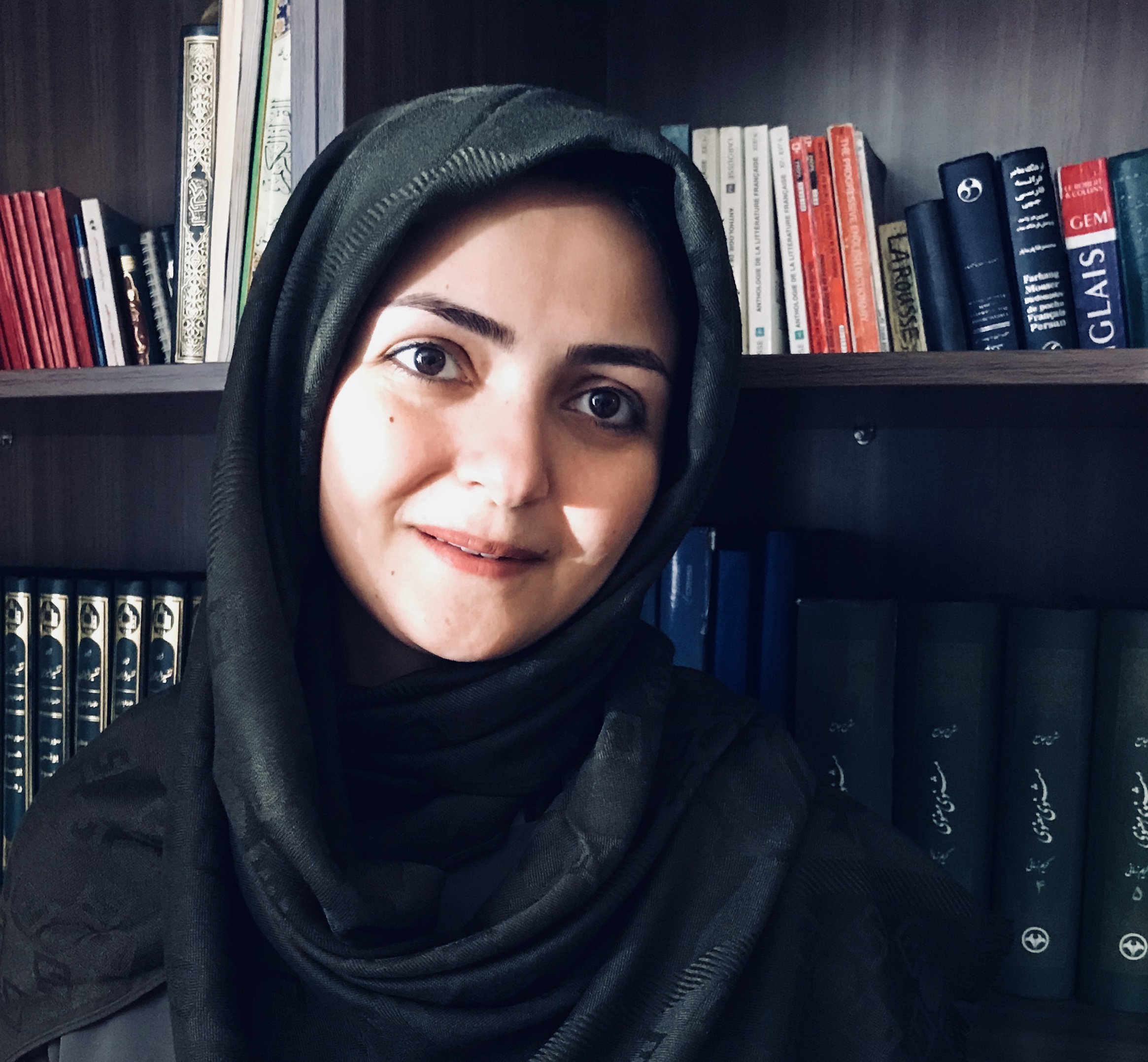
Zahra Mobballegh is an Assistant Professor and scholar of philosophy, Islamic studies, and feminist theology, with over seventeen years of academic experience in Iran and the United States. For the past three years, she has served as a Research Associate and Lecturer at Harvard Divinity School, where she teaches courses on Islamic philosophy, logic, and narrative theology. She has also held teaching and research appointments at the University of Tehran and the Institute for Humanities and Cultural Studies, where she taught extensively in philosophy, women’s studies, and religious studies, and played a key role in developing interdisciplinary curricula on gender and theology. From 2007 to 2014, Mobballegh was a faculty member and editor at the Encyclopaedia of the World of Islam.
Her peer-reviewed publications span topics such as Illuminationist logic, feminist epistemology, and the metaphysics of emotion, and appear in academic journals and edited volumes in both Persian and English. She has also translated numerous chapters, articles, and reference entries in philosophy and Islamic studies from English into Persian. Her first book, Faith as Reason (2013), was the first Persian-language monograph on feminist theology and epistemology. Her second, The Logical Structure of Illuminative Philosophies (2020), explores Ishrāqī logic as a non-Aristotelian model of rationality rooted in presence, unity, and ethical intuition. Her forthcoming English-language book, Resistance through Drama: Analyzing Women’s Narratives in the Qur’an, Recovering a Feminist Narrator, develops a narrative approach to theology and offers a reformist reading of the Qur’an’s narrative voice.
Mobballegh has held multiple fellowships at Harvard Divinity School’s Women’s Studies in Religion Program, received several national awards for her scholarship in Iran, and was recently appointed O’Brien Distinguished Visiting Professor at Scripps College. Her current research focuses on critiquing the theological foundations of contemporary political ideologies and developing a theology of peace grounded in narrative, empathy, and moral imagination.