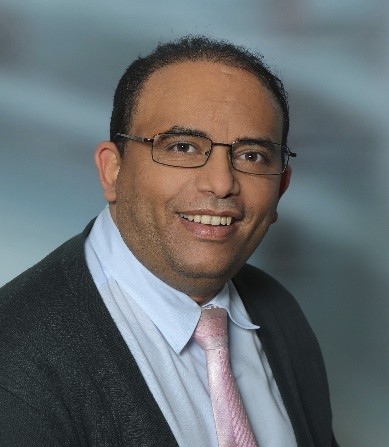
Najeeb Alomaisi is an interdisciplinary academic with expertise that stretches across the fields of political science, public administration, and development economics. Al-Omaisi previously served at the Central Bank of Yemen for more than nine years as a supervisor of the department of local public budget department before shifting his focus to research and teaching following his graduation with DAAD Scholarship and Honor. He completed his Ph.D. in Public Administration and Development Policy at the German University of Administrative Sciences in Speyer, Germany. His Ph.D. work focused on the “Bugs Theory of Governance,” proposing an analytical framework for understanding systematic challenges and constraints that impede effective governance and economic development in fragile and conflict-affected states (FCAS) using Yemen as a case study.
Alomaisi has published research on the political economy of fragile states, with particular emphasis on governance gaps, state fragility, and the structural underpinnings of conflict. In his work, he has addressed themes such as political instability, post-conflict reconstruction, and the role of social capital in fostering economic resilience in contexts of state failure. He recently published a book entitled Governance Challenges in the State of Yemen: Political, Social and Economic Considerations (Cuvillier Verlag, 2023), providing a comparative analysis of Yemeni governance with similar case in the Arab region.
Alomaisi’s current research interests include the role of informal institutions, trust networks, and diaspora engagement in development cooperation in conflict-affected regions. His studies are informed by both qualitative and quantitative research methods and contribute to policy discussions and frameworks on migration, inclusive governance, and development planning. Al-Omaisi is currently working on a series of research projects on federalism in Yemen, Yemen’s Shadow Economy, and the unrealized developmental role of Arab diaspora communities. His ongoing involvement in academic research as a volunteer fellow in the Institute of Public Economic Law Ludwigsburg, in addition to being a member of Academic EURAM and WEAI, has seen him participate in a number of international conferences and serve as a peer reviewer for prominent academic organizations, including EURAM and as a Member of the Western Economic Association International. He is a co-founding member of the German Center for Peace and Development based in Berlin and is an active member of communities that provide support to displaced scholars and promote evidence-based policymaking in the Arab world.