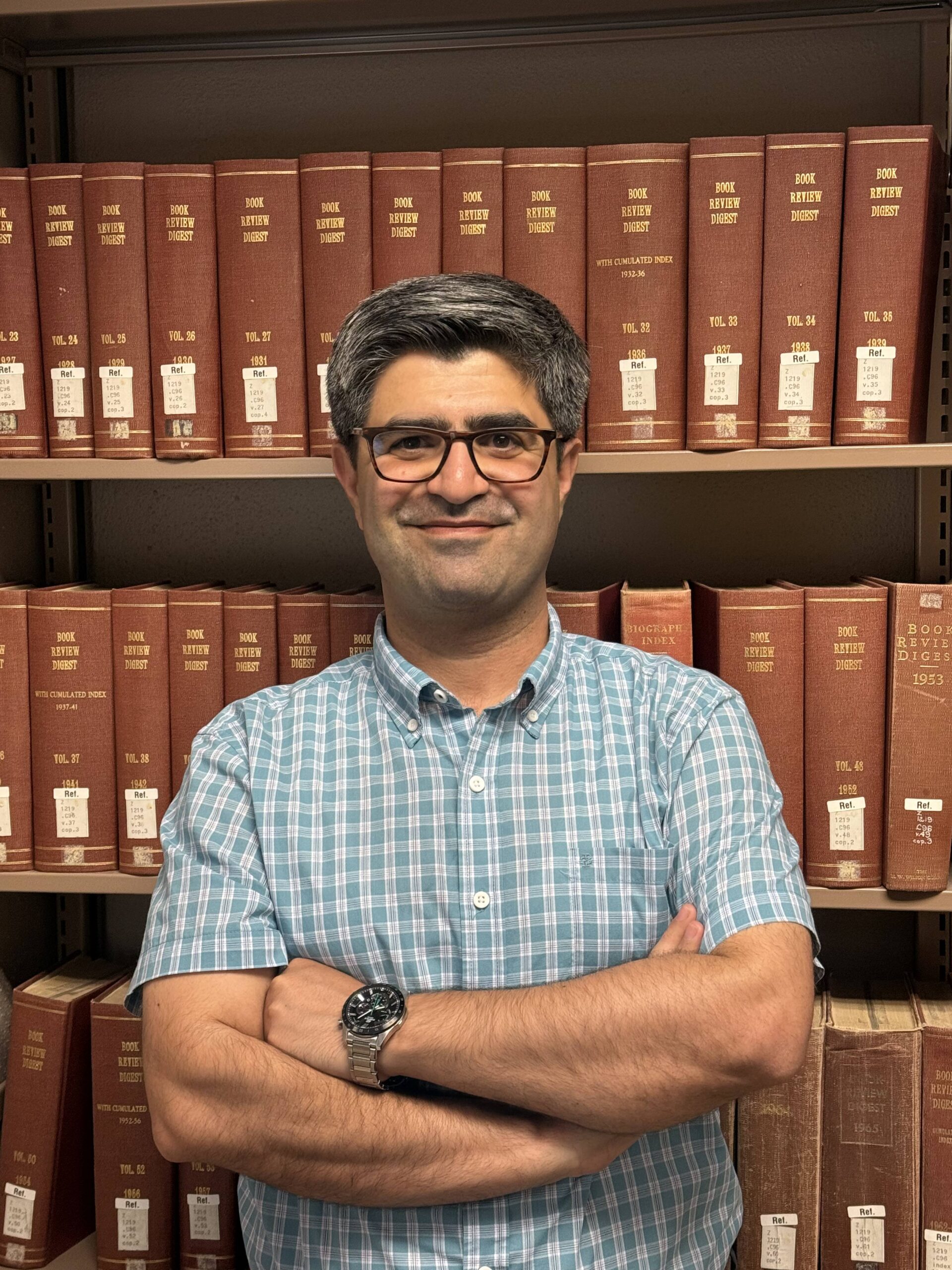
Fateh Saeidi is a Postdoctoral Fellow (2024–2026) in the Department of Religious Studies at the University of Texas at Austin. He received his PhD in Iranian Studies from Georg-August-Universität Göttingen in 2023 and previously taught as a lecturer at Soran University in Kurdistan from 2015 to 2024. His research lies at the intersection of the sociology of religion and colonial studies, with a particular focus on Iranian Kurdistan and the broader Middle East. His scholarship centers on two interrelated areas. The first explores the historical development of Sufism and Islam in the Middle East, with a particular focus on Iran and Kurdistan. His research examines early Sufi networks, renunciant piety, and the formation of spiritual authority within Islam, especially in the Jibāl region. He also investigates the role of political Islam in shaping religious institutions, power structures, and identity formation. His monograph on The Development of Renunciant Piety and Classical Sufism in the Jibāl Region is currently under review.
The second area of his work engages with anti-colonial theory to analyze how state-driven mechanisms, such as nationalism, religious policy, and cultural erasure, have historically targeted Kurdish identity across the Middle East. He studies the intersections of ethnicity, religion, and gender within systems of domination and resistance, with a particular focus on how Kurdish communities navigate state violence and assert claims to cultural and political agency. Beyond academia, he contributes to public intellectual discourse through platforms such as Tishk Magazine, writing on Kurdish nationalism and social justice in Kurdistan and the wider region. His editorial and scholarly work seeks to bridge academic research with grassroots activism, amplifying Kurdish perspectives often marginalized in dominant state narratives. He is also co-editor of the forthcoming volume Guranica: On the Literary, Linguistic, Religious, and Cultural Dimensions of Guran, currently in preparation.